
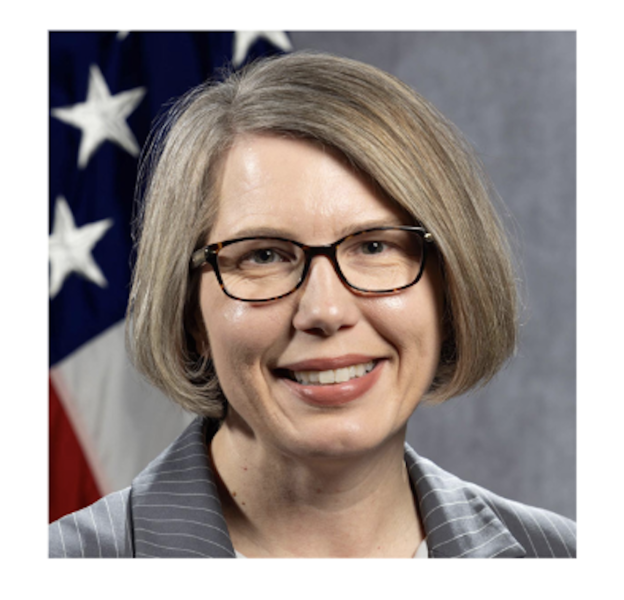
AbleChild Challenges FBI: Drop Dr. Karie Gibson as Behavioral Analysis Unit (BAU) Head
Republished with permission from AbleChild.
AbleChild is calling for the removal of Dr. Karie Gibson as Unit Chief of the Federal Bureau of Investigation’s (FBI) Behavioral Analysis Unit-1 (BAU-1) and head of the Behavioral Threat Assessment Center. The unit’s expanding influence over schools, hospitals, and community threat-assessment systems, combined with its refusal to confront the documented risks of psychiatric over-medication in children, demands a change in leadership.
Americans are being told that the FBI’s “behavioral threat assessment” will keep the nation safe from terrorism and mass violence. At the center of that promise is BAU-1, presented as the expert team that understands dangerous behavior and helps stop attacks. AbleChild’s concern is that the same ideas are drifting into schools, hospitals, and child-welfare systems without honest debate about who is shaping them, who is funding them, and how they interact with the psychiatric industry.
The Iran–California drone scare follows the same script Americans have learned to recognize after mass shootings. In March 2026, the media reported that the FBI had warned California police that Iran might attack the state with drones. The underlying bulletin said something much narrower: it relayed unverified information that Iran had “aspired” to such an attack if the U.S. struck first, and officials quickly stressed there was “no imminent threat.” The memo did not come from BAU-1 but from counterterrorism channels.
To the public, though, it was simply “the FBI,” and within hours it had become a national scare story. That is exactly how the conversation unfolds after many mass shootings: vague or early-stage “warning signs” are turned into headlines about missed behavioral clues, while the deeper record, years of psychiatric diagnoses, black-box-warning medications known to increase suicide risk, and a system that never honestly tracks those outcomes is left largely unexamined.
In June 2025, a conference called Behavioral Analysis 2025 was held at the Mall of America in Minnesota. It was marketed as a three-day event on “behavioral analysis” for security and law-enforcement professionals. The venue itself is heavily securitized, with cameras, K-9 units, and behavior-detection teams. The keynote speaker was Dr. Karie Gibson, Unit Chief of BAU-1 and head of the FBI’s Behavioral Threat Assessment Center. Dr. Gibson’s presentation promoted “behavior detection” as something increasingly embraced by U.S. law-enforcement.
The conference was not government sponsored. Rather, it was organized by Green Light Ltd., a London-based security consultancy that sells “behavioral analysis solutions,” including a proprietary risk-scoring tool called T.R.A.P.® (Tactical Risk Assessment of People). Under one roof, a private vendor was promoting its products, a large mall was showcasing its security model, and the head of BAU-1 was lending FBI prestige to the overall concept of behavior-detection.
The Mall of America event also featured sessions linked to the United Nations Office of Counter-Terrorism and its International Hub on Behavioral Insights to Counter Terrorism in Doha, Qatar. That UN hub uses behavioral science to develop counter-terrorism tools and training. It operates under an agreement with the Qatari government and has received multi-million-dollar support from Qatar to fund its work.
Put simply, there is a chain: Gulf funding supports a UN behavioral-insights hub; that hub appears on programs alongside a private British vendor; and the FBI’s BAU-1 chief keynotes the same conference at an American shopping mall.
The same “behavior detection” ideas and tools are then promoted into U.S. hospitals, schools, and other institutions through guidance and training that reference BAU-style threat assessment.
AbleChild’s research focuses on how children are labeled and medicated inside education, health, and child-welfare systems. In those systems, “risk” and “disorder” are defined largely by psychiatric diagnoses and psychotropic drugs. Many children end up on multiple medications, sometimes off-label, with limited long-term safety data and without full informed consent.
Despite this, the public materials made available by BAU-1 and its Behavioral Threat Assessment Center rarely confront the psychiatric industry directly. Guidance for hospitals and other institutions discuss at length “concerning behaviors,” “threat assessment teams,” and law-enforcement partnerships, but provides very little about over-diagnosis, side effects, or how medications can change behavior in ways that might later be treated as warning signs.
It’s well known, from FDA black box warnings, that many antidepressants and other psychotropic drugs can increase the risk of suicidal thinking and behavior in children and young adults. That risk is not speculative; it is acknowledged in the most serious safety warning the agency can place on a label. Yet those facts barely appear in the behavioral-threat conversation, even though BAU-style assessments are applied to the same youth who are most likely to be exposed to those drugs.
The federal behavioral-science apparatus grew up in an earlier era, when the focus was on adult serial offenders and headline-grabbing terrorism cases, and when the wider system largely accepted psychiatric labels and medications as neutral background facts. That might have been understandable in the 1990s, when Janet Reno’s Justice Department was trying to modernize forensics and intelligence, but the scale of child psychiatric prescribing and black box warnings was not yet fully visible.
Today, that posture is no longer acceptable. If BAU-1 is going to lend its name to behavior-detection schemes, threat-assessment toolkits, and “early intervention” models that reach deep into schools and pediatric care, it has an obligation to update its framework. That means gathering the right data: not just on body language and social media posts, but on diagnostic trends, medication patterns, adverse-event reports, and the ways in which psychotropic drugs can drive the very agitation, impulsivity, and despair that later show up as “red flags.”
AbleChild is not suggesting the FBI should never work with malls, hospitals, or international partners. AbleChild is suggesting that any behavioral-threat system that touches children must be built on honest evidence, including the known risks flagged in black box warnings, and must be transparent about how it is funded and who benefits. In addition, Americans need to be aware of all international influences within the FBI.
For that reason, AbleChild is formally calling for Dr. Karie Gibson’s name to be removed from the leadership of BAU-1 and the Behavioral Threat Assessment Center, and for new leadership committed to genuine transparency, independent science, and full acknowledgment of the harms already being done to children under the current behavioral health model. Until BAU-1 is willing to change course and connect these dots, parents are right to be wary of yet another layer of behavioral surveillance wrapped in the language of safety.
Be the Voice for the Voiceless
AbleChild is a 501(3) C nonprofit organization that has recently co-written landmark legislation in Tennessee, setting a national precedent for transparency and accountability in the intersection of mental health, pharmaceutical practices, and public safety.
What you can do. Sign the Petition calling for federal hearings!
Donate! Every dollar you give is a powerful statement, a resounding declaration that the struggles of these families will no longer be ignored. Your generosity today will echo through generations, ensuring that the rights and well-being of children are fiercely guarded. Don’t let another family navigate this journey alone. Donate now and join us in creating a world where every child’s mind is nurtured, respected, and given the opportunity to thrive. As a 501(c)3 organization, your donation to AbleChild is not only an investment in the well-being of vulnerable children but also a tax-deductible contribution to a cause that transcends individual lives.