
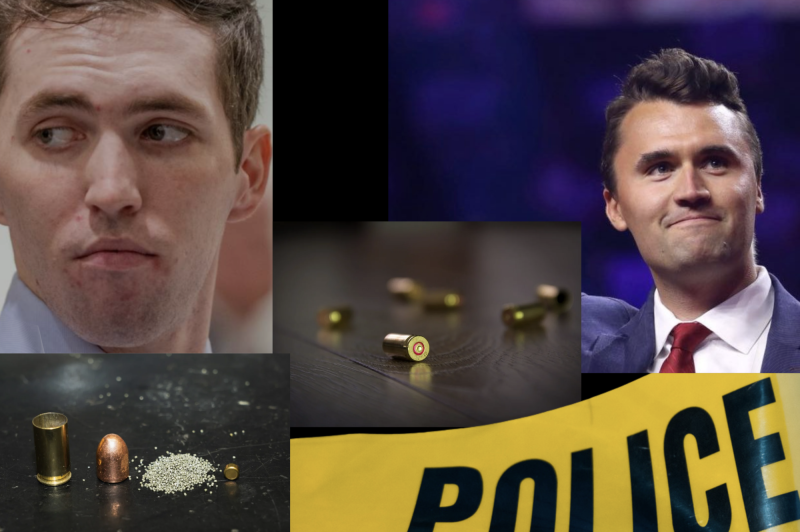
Kirk Ballistics Meltdown Raises Important Questions About the Public’s Right to Know
Republished with permission from AbleChild.
In the last 24 hours there has been great weeping and gnashing of teeth because the Daily Mail had the audacity to run an article titled “Bullet used to kill Charlie Kirk did NOT match rifle allegedly used by suspect Tyler Robinson, new court filing claims.”
The article explains that Robinson’s defense attorneys argue that the Bureau of Alcohol, Tobacco, Firearms and Explosives (ATF) “was unable to identify the bullet recovered at autopsy to the rifle allegedly tied to Robison.” The article also goes into some detail about there being more than one DNA contributor on evidence and that the defense has yet to receive forensic case files necessary for the alleged shooter’s defense.
So, what’s the big deal that so many respected people and news outlets are having a conniption about the Daily Mail headline? Well, beyond obvious bias, one can conclude that if the recovered projectile cannot be matched to the alleged rifle, then the door to a jury finding reasonable doubt has been opened.
But here’s the problem with all this whining about how the Daily Mail reported the information. First, the actual ATF ballistics report has not been made publicly available. Why? What’s the big secret? Secondly, the Daily Mail reporter apparently is quoting from the defense attorney’s court filing, where those attorneys have advised the court what was found in the ATF report and how it affects their case. Seems logical so far.
But go onto any social media site and it’s all hell breaking lose. Not because the Daily Mail reporting is not accurate but, rather, everyone is upset with the way the ATF evidence has been explained. For example, Fox News reports the same day that “Experts debunk Tyler Robinson’s ballistics claim: ‘Unable to identify is not the same as ruled out.’”
The Fox article explains that “…experts say inconclusive testing doesn’t mean the match has been ruled out, and investigators have compiled other evidence in the case…” But it also can be said the inconclusive testing doesn’t mean that there is a match. At some point the bias of news outlets gets silly and reduced to semantics.
The information that was provided to the court is that Robinson’s “defense has been provided with an ATF summary report which indicates that the ATF was unable to identify the bullet recovered at autopsy to the rifle allegedly tied to Mr. Robinson.” No more. No less. To a lay person, it certainly reads like the ATF could not match the bullet to the alleged rifle.
But what is more importantly missed throughout all this whining is that it diverts attention away from the actual evidence. First, the public needs to see the actual ATF report. What was the chain of custody? Was it a complete “bullet” that was recovered and tested or were there bullet “fragments” tested? If it is bullet “fragments,” were all the fragments recovered from Kirk’s body and what is the weight of the fragments recovered? Does that weight equal a 30-06 bullet?
The fact that the ATF and FBI often are unable to make complete bullet comparisons appears to be common in high profile cases. For example, according to the ballistics report on the 2012 Sandy Hook School shooting, “No positive identification could be made to any of the bullet evidence submissions noted above in the 5.56mm caliber” the weapon allegedly used by Adam Lanza. And the glock 10mm that was the alleged weapon Lanza used to kill himself… “no positive identification could be made.” (File 97)
AbleChild is unaware of anyone in the mainstream media questioning why law enforcement was unable to match any bullets to any of the alleged weapons used in the tragedy of Sandy Hook, so it seems odd that there are literal meltdowns occurring over a seemingly benign headline about the bullets/weapons attached to the Charlie Kirk death.
The same can be said of the assassination attempt in Butler PA. Although the FBI still refuses to release its investigation of the shooting at Butler, the House Committee investigating the shooting did release snippets of the ballistics conducted and came up with “a small copper-colored metal jacket fragment was recovered from the upper right back during the autopsy…the FBI has possession of the fragment.” And “all reviewable evidence collected from the AGR roof and from the subject’s body are consistent with the round fired by the Secret Service sniper.” How do you like that? “Consistent with.” There’s some specificity!
So, it appears that law enforcement, at least in high profile cases, has a tough time with ballistics surety. What the public really needs is for law enforcement to make investigative materials public. Shine a light on this stuff. Without it, the public is left speculating and questioning the integrity of investigations. Not a good look for a nation that prides itself on transparency and the rule of law.
Be the Voice for the Voiceless
AbleChild is a 501(3) C nonprofit organization that has recently co-written landmark legislation in Tennessee, setting a national precedent for transparency and accountability in the intersection of mental health, pharmaceutical practices, and public safety.
What you can do. Sign the Petition calling for federal hearings!
Donate! Every dollar you give is a powerful statement, a resounding declaration that the struggles of these families will no longer be ignored. Your generosity today will echo through generations, ensuring that the rights and well-being of children are fiercely guarded. Don’t let another family navigate this journey alone. Donate now and join us in creating a world where every child’s mind is nurtured, respected, and given the opportunity to thrive. As a 501(c)3 organization, your donation to AbleChild is not only an investment in the well-being of vulnerable children but also a tax-deductible contribution to a cause that transcends individual lives.