
The 2020 Election Steal Was Built Before COVID – Part II
By Christine Bish
After the Grant: The Alarm Sacramento and California Cannot Ignore – But Did
The Grand Jury warned Sacramento. CTCL money entered the system. DHS review came too late. Now the public deserves the records.
Editor’s note: This follow-up article to Part I and Part II is a public-record and subpoena-roadmap piece. It does not claim the public record alone proves fraud, vote manipulation, or criminal intent. It argues that documented pre-grant warning signs justify a deeper investigation.
The first article followed the money.
It showed how Zuckerberg/Chan-funded CTCL money entered Sacramento County’s election office and helped fund vote-center workers, ballot drop boxes, voter education, polling-place costs, translation, and mail-ballot processing support.
The second article followed the warning signs.
It showed that before CTCL money arrived, Sacramento County already had documented problems involving voter files, turnout reporting, poll-worker ballot selection, Grand Jury election-security concerns, vendor updates, and removable-media procedures.
This article is the alarm.
Sacramento County and California officials had reason to know there were serious election-system questions before, during, and after the 2020 election. The Grand Jury raised election-security concerns. Sacramento updated USB procedures after the Grand Jury report and a cybersecurity audit. The county had already dealt with voter-file problems, misleading turnout reporting, poll-worker ballot-selection errors, vendor updates, and removable-media procedures.
Then CTCL money entered the same election office.
Then the 2020 election was run.
Then Sacramento reported back to CTCL.
Then CTCL approved an extension.
And the DHS assessment tied to the Grand Jury recommendations still had not been completed.
Sacramento and California cannot say there was no warning. There was warning. They cannot say there was no record. There is a record. They cannot say no one asked. I did. And that is why I am sounding the alarm now.
The DHS assessment was not arbitrary. It was tied to the Sacramento County Grand Jury’s election-security work. The Grand Jury had already identified election-security concerns during the 2020 election cycle and requested further review. This was not a political talking point. It was a formal local-government warning.
Yet on July 21, 2021, Sacramento County Registrar Courtney Bailey-Kanelos stated that all Grand Jury recommendations had been implemented except the DHS assessment. She said the DHS assessment was scheduled for August 2021, with remote testing from August 16 through August 20 and on-site testing from August 23 through August 27.
That means Sacramento County ran the November 2020 election before the Grand Jury-linked DHS assessment was completed.
And the timing gets even more important.
The August 2021 election was not routine. It was the statewide recall election of Governor Gavin Newsom.
That recall ballot had two questions: should Newsom be recalled, yes or no, and who should replace him if the recall succeeded. The second question only mattered if the first question passed. That made the yes-or-no recall vote the central contest on the ballot.
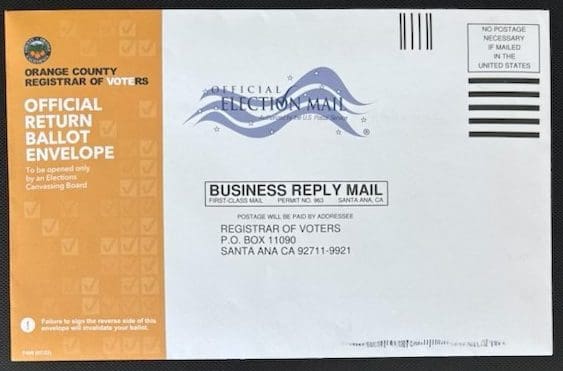
During that same recall election, voters raised concerns that the hole in the ballot-return envelope could expose whether someone had voted “Yes” on the recall question. Election officials and fact-checkers disputed claims that the holes proved ballot rejection or manipulation, but the controversy still raised a ballot-secrecy concern during one of the most politically charged statewide elections in California history.
Now place that beside the Registrar’s July 2021 email.
She wrote that the timing of the DHS assessment “worked out pretty well” because Sacramento would be in full election mode while DHS was there, allowing DHS to identify concerns or vulnerabilities in real time.
That sentence should stop every reader.
If DHS review during full election mode was useful during the Gavin Newsom recall, why was the same DHS assessment not completed before the November 2020 presidential election?
Why was Sacramento allowed to run the 2020 general election with CTCL-funded workers, ballot drop boxes, voter outreach, mail-ballot processing support, vendor-provided USB drives, Dominion updates, Runbeck ballot-mailing operations, BPRO public reporting, barcode-based postmark decisions, and unresolved Grand Jury-linked DHS review?
This does not prove fraud. It proves sequence. It proves notice. It proves the public record is incomplete without subpoenas.
Sacramento County’s own records show that its results-reporting process relied on one-time USB drives. The county’s procedure stated that USB drives transferred data from the election reporting system to a network-connected computer for public upload. Those drives were supplied by the election tabulation and reporting vendor, scanned on a sandbox laptop, labeled, stored, logged, and retained. The redacted November 2020 log shows ER-numbered USB entries used for results reporting from November 3 through November 24.
The public should not have to accept summaries. The public needs the logs.
The November 25, 2020 email adds more layers. Dominion staff had been physically present to install system updates before the election. Runbeck was involved in printing and mailing. BPRO handled interactive results reporting but did not tabulate. The county used barcode interpretation when some postmarks were illegible.
Again, none of that alone proves fraud. But together, it proves a complex election operation with multiple vendors, multiple handoffs, removable-media transfers, ballot-mailing dependencies, and unresolved security review.
Then there is the state-notice issue.
In a December 1, 2020 email, the Registrar confirmed that she had spoken with a manager-level employee at the California Secretary of State’s office after an August 7, 2020 conversation concerning election-system issues. She also referenced a pending lawsuit and said she was not sure what she could discuss.
That lawsuit should be disclosed for transparency.
At the time, I was the petitioner in Christine Bish v. Sacramento County; Doris O. Matsui, Real Party in Interest, a petition for writ of mandate involving Sacramento County’s certification duties and the Secretary of State’s role after my challenge to Matsui’s qualifications was forwarded. That context matters because the Registrar’s confirmation of manager-level contact with the Secretary of State did not occur in a vacuum. It occurred while active litigation, election-certification questions, and documented election-system concerns were already on the table.
That raises the next unavoidable question: What did the Secretary of State know before the November 2020 election? What was reported? Who received it? What corrective action was ordered? Were the Grand Jury concerns, cybersecurity audit, USB procedures, voter-file issues, turnout-reporting problems, vendor updates, and poll-worker ballot-selection errors discussed with the state before the election? If so, where are those records?
Article 1 showed the money. Article 2 showed the warning signs. Article 3 shows the notice trail. And the notice trail is the hardest one to dismiss.
Sacramento County accepted CTCL money in October 2020. During the November election, Sacramento used vendor-provided USB drives to move result files from the election reporting system to a network-connected computer. The county had vendor handoffs involving Dominion, Runbeck, and BPRO. It relied on barcode interpretation when some postmarks were illegible. It confirmed manager-level contact with the Secretary of State’s office. It reported back to CTCL after the election. CTCL approved an extension after the election. And the DHS assessment tied to the Grand Jury recommendations was still not completed until August 2021 – during the next major statewide political test, the Gavin Newsom recall.
This is the alarm Sacramento and California cannot ignore – but did.
The Grand Jury raised the security concerns. The county updated procedures. The Registrar confirmed state-level contact. CTCL money funded election operations. USB drives moved result files from the election reporting system to a network-connected computer. Vendors touched critical parts of the process. The DHS assessment did not happen until the next major statewide political test: the Gavin Newsom recall.
If everything was secure, lawful, and properly controlled, the records should prove it. If vulnerabilities existed before or during the 2020 election and were not reviewed until afterward, the public deserves to know.
DOJ should subpoena the full record: the Grand Jury recommendation file, DHS scheduling records, the DHS assessment, CyberDefenses records, unredacted USB logs, vendor-supplied USB records, serial numbers, hash values, sandbox scan records, reporting-server logs, Dominion work orders, access logs, change logs, logic-and-accuracy records, Runbeck voter-file transmissions, ballot-mailing records, BPRO reporting records, barcode postmark instructions, ballot-envelope images, SOS communications, litigation-related communications, CTCL reports, CTCL extension records, recall-envelope complaints, and any remediation ordered before, during, or after the 2021 recall.
Sacramento and California had notice. Now DOJ should subpoena the records. That is why I am sounding the alarm.